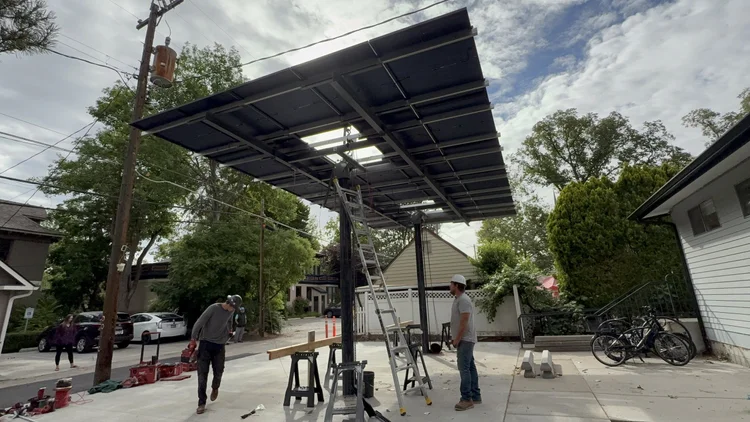
Hi Friends —I spend most of my time in Boise — but last week I was working at our small satellite office in Portland when, poof, the power went out. It was no big deal at first. I mean, it was a sunny day, so we didn't miss the lights; the A/C quit, which was almost a relief in our over-air-conditioned building; and my laptop didn't even flicker. It got trickier when we found both our office key cards and the elevator were dead — meaning we could leave the building, but not get back in! We chanced lunch anyway: stoplights out, restaurants closed, our whole part of town without power for about three hours. In all, we suffered a little inconvenience and a bit of discomfort — and then the lights came back and our day resumed. That night I mentioned it to a family member, who said, "Well, that's nothing compared to Gary." They meant Gary, Indiana, where a storm with winds near 100 mph tore through on August 11 and left much of the city without power — thousands still in the dark nearly two weeks later. Gary is a city of about 70,000, nearly 80% Black, with a third of residents below the poverty line. This is not the first time – and sadly will probably not be the last – that Gary has suffered from weaker infrastructure, and a harder recovery. My three hours without power in Portland and Gary's two weeks in the dark are not remotely the same. But the juxtaposition of recent events has sharpened how I think about resilience — as a human right, rather than as a privilege. As it stands, the grid doesn't lose power equally, and it doesn't come back equally either. These recent events have provided a chance to reflect on just how grateful I am for the resilience we’ve been able to build in Boise with our new solar-and-battery installation — and even more committed to investing in that same resilience for historically vulnerable communities like Gary, which too often face the harshest disruptions and the slowest recovery. To resilience everywhere! Lisa & The Figure 8 Team
|